
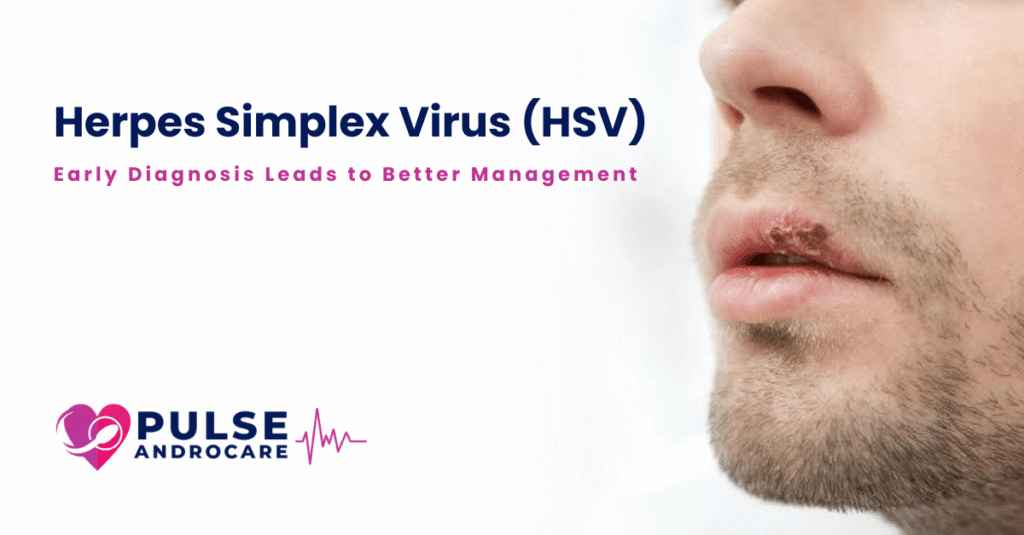
Herpes Simplex Virus (HSV) is one of the most common viral infections worldwide. It can affect both men and women and is usually spread through close physical or sexual contact. Although herpes is a lifelong viral infection, early diagnosis and proper treatment can help manage symptoms effectively and reduce the risk of transmission.
Many people with herpes may not even know they are infected because symptoms can be mild or absent. Understanding the signs and seeking timely medical care can help prevent complications and improve quality of life.
What is Herpes Simplex Virus (HSV)?
Herpes Simplex Virus is a viral infection caused by the herpes simplex virus. There are two main types:
HSV-1 (Herpes Simplex Virus Type 1)
HSV-1 commonly causes oral herpes, leading to cold sores or fever blisters around the mouth. However, it can also cause genital herpes through oral-genital contact.
HSV-2 (Herpes Simplex Virus Type 2)
HSV-2 primarily causes genital herpes and is usually transmitted through sexual contact.
Once a person is infected, the virus remains in the body and may become active again periodically.
How Common is Herpes?
Herpes is one of the most common sexually transmitted infections worldwide.
Millions of people are living with HSV infection, and many remain undiagnosed because they may not experience noticeable symptoms.
The good news is that herpes can be effectively managed with proper medical guidance and lifestyle measures.
How Does Herpes Spread?
Herpes can spread through:
- Vaginal intercourse
- Oral sex
- Anal sex
- Skin-to-skin contact with infected areas
- Kissing (in oral herpes)
Contact with herpes sores, saliva, or genital secretions
It is important to know that herpes can spread even when there are no visible sores or symptoms.
Causes and Risk Factors for HSV Infection
You may have a higher risk of herpes infection if you:
- Have unprotected sexual contact.
- Have multiple sexual partners.
- Have a partner with known HSV infection.
- Have a weakened immune system.
- Have a history of other sexually transmitted diseases.
Symptoms of Herpes Simplex Virus Infection
Symptoms may vary from person to person. Some individuals may have severe symptoms, while others may not notice any symptoms at all.
Common symptoms include:
Painful Blisters or Sores
Small fluid-filled blisters around the genital area, anus, buttocks, or mouth.
Burning or Itching Sensation
Many people experience itching, tingling, or burning before sores appear.
Pain During Urination
Passing urine may become painful if sores are present around the genital area.
Fever and Body Aches
Some individuals experience flu-like symptoms during the first outbreak.
Swollen Lymph Nodes
Lymph nodes in the groin may become enlarged and tender.
Fatigue and General Weakness
The first episode may be associated with tiredness and discomfort.
What Does a Herpes Outbreak Look Like?
A typical herpes outbreak usually progresses through different stages:
- Tingling or itching sensation.
- Formation of small blisters.
- Blisters break and form painful ulcers.
- Sores gradually heal over several days.
The first outbreak is usually more severe than later recurrences.
Can Herpes Occur Without Symptoms?
Yes.
Many individuals infected with HSV never develop noticeable symptoms. However, they can still transmit the infection to others.
Because herpes can remain silent, many people may unknowingly carry and spread the virus.
Regular screening and medical consultation are important if you suspect exposure.
Can Herpes Recur?
Yes.
After the initial infection, the virus remains inactive in nerve cells and may reactivate periodically.
Common triggers for recurrent outbreaks include:
- Stress
- Lack of sleep
- Fever or illness
- Weak immune system
- Physical or emotional stress
Recurrences are generally milder and shorter than the first episode.
How is Herpes Diagnosed?
At Pulse Androcare, diagnosis begins with a detailed and confidential evaluation.
Diagnosis may include:
Medical History Assessment
Understanding symptoms, sexual history, and possible exposure.
Physical Examination
Examination of sores or skin lesions.
Laboratory Tests
Specific tests may be recommended to confirm HSV infection when necessary.
Early diagnosis helps improve symptom management and reduce the risk of transmission.
Herpes Simplex Virus Treatment in Nellore
Although herpes does not currently have a permanent cure, treatment can effectively help:
- Reduce symptom severity
- Shorten outbreak duration
- Decrease the frequency of recurrences.
- Lower the risk of transmission to partners.
- Improve overall quality of life.
Treatment plans are individualized depending on symptoms and recurrence patterns.
Avoid self-medication, as proper diagnosis is essential for effective management.
Can Herpes Affect Fertility?
Herpes generally does not directly cause male infertility. However, untreated infections and recurrent symptoms may affect emotional well-being, sexual confidence, and relationship satisfaction.
Seeking timely treatment and counseling can help manage these concerns effectively.
How to Prevent Herpes Infection?
The following measures can help reduce the risk of HSV transmission:
Practice Safe Sexual Habits
Using protection can significantly reduce the risk.
Avoid Sexual Contact During Active Outbreaks
The risk of transmission is highest when sores are present.
Maintain Open Communication With Partners
Discussing sexual health and testing can help reduce risks.
Improve Overall Immunity
Healthy lifestyle habits may help reduce recurrent outbreaks.
Seek Medical Advice Early
Early consultation can prevent complications and improve outcomes.
Possible Complications of Untreated Herpes
Although herpes is usually manageable, untreated infections may lead to:
- Frequent recurrent outbreaks
- Increased emotional stress and anxiety
- Increased risk of other sexually transmitted infections
- Relationship difficulties
- Reduced quality of life
Early diagnosis and appropriate management can help minimize these issues.
Why Choose Pulse Androcare for Herpes Treatment in Nellore?
At Pulse Androcare, we understand that sexually transmitted infections can cause anxiety and emotional stress.
Our approach focuses on:
- Confidential consultations
- Comprehensive evaluation and diagnosis
- Personalized treatment plans
- Patient education and counseling
- Evidence-based medical care
- Complete privacy and compassionate support.
We are committed to helping patients manage their condition and improve their overall sexual health.
About the Doctor
Dr. Sreenivas Chowdary
MBBS, MS, FISPSM (ACS)
Male Infertility Specialist & Sexologist
Dr. Sreenivas Chowdary specializes in diagnosing and managing various men’s sexual health conditions, including genital herpes, sexually transmitted diseases, erectile dysfunction, premature ejaculation, and male infertility.
His patient-centered and confidential approach focuses on accurate diagnosis, education, and personalized treatment solutions.
Consult an Expert for Herpes Simplex Virus Treatment in Nellore
If you are experiencing symptoms such as genital sores, blisters, itching, burning sensation, or suspect exposure to herpes infection, do not ignore the symptoms.
Book a confidential consultation with Dr. Sreenivas Chowdary, MBBS, MS, FISPSM (ACS), Male Infertility Specialist & Sexologist at Pulse Androcare, Nellore, for expert evaluation and personalized care.
Take the first step toward better sexual health and peace of mind with expert care from Pulse Androcare – Your Trusted Men’s Health Clinic in Nellore. If you are searching for Herpes Simplex Virus Treatment in Nellore, Genital Herpes Treatment Near Me, or an experienced Sexologist in Nellore, this guide will help you understand the condition better.